[below] Wyjątkowa historia
Berta urodziła się w żydowskiej rodzinie krawca, która nie była ortodoksyjna. Przyszła na świat w Kowlu w 1920 r. Rodzice starali się pielęgnować tradycje i zwyczaje religijne. W Nowym Sączu rodzina zamieszkała tuż przed wojną. Berta, brat i rodzice (Jidl i Tauba) zamieszkali na Kraszewskiego 22. Rok młodszy od Berty Stefan Mazur już wówczas pracował u zegarmistrza Henryka Dobrzańskiego na ulicy Jagiellońskiej. W 1940 r. Berta trafiła do getta z całą rodziną. oraz swoją koleżanką Helą Szancer, dosyć ważną postacią w tej opowieści.
Nawet w getcie Mazur odwiedzał Bertę i jej rodzinę, dostarczając pożywienie, leki i wszystko, czego potrzebowali. 23 sierpnia rozpoczęła się likwidacja getta w Sączu. Wszyscy zdawali sobie sprawę, jaki czeka ich los. Wiedząc, co będzie się działo, Stefan postanowił uratować ukochaną.
Sama ucieczka była brawurowa. Tak opisywała ją Berta: „W umówionym dniu wieczorową porą Stefan przyszedł w pobliże muru getta i gdy dał mi znak, że czeka, ja wdrapałam się z pomocą mej koleżanki Heli Szancer na mur i zeskoczyłam w zarośla na tak zwaną aryjską stronę. Następnie, odczekawszy chwilę, pobiegliśmy ze Stefanem do kryjówki – pomieszczenia mechanizmu ratuszowego zegara, który był codziennie nakręcany przez Stefana zatrudnionego w zakładzie sprawującym jego bieżącą konserwację”.
Miejsce kryjówki było mocno nietypowe, ale jednocześnie zupełnie nieodwiedzane przez Niemców. Berta poprosiła Stefana, żeby wyciągnął z piekła getta także Helę. Udało się też i jej, ale dziewczyny nie mogły przebywać razem. Ratuszowa kryjówka była niezbyt bezpieczna i dlatego Hela Sznacer obawiała się korzystać z tego miejsca schronienia. Była w posiadaniu aryjskich papierów na nazwisko Makowska i postanowiła jak najrychlej wydostać się z Nowego Sącza, co się powiodło.
Berta w tym czasie żyła spokojnie w ratuszu, nad głowami najważniejszych Niemców w mieście. Uspokoiła się, kiedy dowiedziała się, że Hela trafiła do Gromnika, gdzie schowała się u przypadkowo poznanych wysiedleńców z Pomorza. Tymczasem Stefan codziennie wychodził na szczyt ratuszowej wieży, niby po to, by nakręcić stary mechanizm, a tak naprawdę przynosił żywność i wynosił nieczystości. Spędzał chwile z ukochaną. Hałas mechanizmu zegarowego, tykające minuty przypominały Bercie o rodzinie, którą straciła w czasie likwidacji getta.
Uciekli do Gromnika, gdzie dołączyła do Heli. Kiedy Stefan dowiedział się o czającym się tam dla nich niebezpieczeństwie, postanowił je znowu ratować. Berta pojechała dalej ze Stefanem w stronę Lwowa, Hela została w Przemyślu. „Po przybyciu pociągiem do Lwowa trafiliśmy na łapankę, w wyniku czego zapędzono nas do obozu przejściowego, do ogrodzonych baraków”. Przetrwali cudem, mieli dobre dokumenty. Potem zostali wywiezieni na roboty do Niemiec. Doczekali wolności i pobrali się. Zamieszkali w Lublinie.
Nie mieli w domu tykającego zegara, bowiem ten dźwięk przypominał dawnej Bercie o trudnym czasie wojny… Stefan Mazur został uhonorowany Medalem Sprawiedliwy wśród Narodów Świata.
Berta zmarła w 1992 r., zaś Stefan w 2006 r.
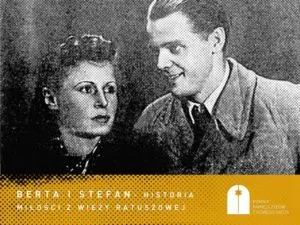
Berta was born in Kowel in 1920 to a Jewish tailor’s family, which was not Orthodox. Her parents tried to cultivate religious traditions and customs. The family settled in Nowy Sącz just before WWII. Berta, her brother and parents (Yidl and Tauba) lived at 22 Kraszewskiego Street.
Stefan Mazur, Berta’s junior by one year, was already working for Henryk Dobrzański, a watchmaker, at Jagiellońska Street. In 1940, Berta was sent to the ghetto with her entire family and her friend Hela Szancer, a rather important figure in this story. Mazur visited Berta and her family even in the ghetto, providing food, medicine and everything they needed.
The liquidation of the ghetto in Sącz began on 23 August 1942. Everyone was aware of what was in store for them, and thus, Stefan decided to save his beloved.
Their escape was daring. This is how Berta described it: „Stefan came to the vicinity of the ghetto wall on the day we had agreed on, in the evening, and when he gave me a sign that he was waiting, I climbed the wall with the help of my friend Hela Szancer and jumped into the bushes on the so-called Aryan side. Then, having waited a while, we ran with Stefan to the hiding place – the room of the town hall clockwork, winded up every day by Stefan, who worked at the factory responsible for its everyday maintenance”.
The hiding place was highly unusual, but at the same time completely unvisited by the Germans. Berta asked Stefan to get Hela out of the hell of the ghetto as well. She also managed to leave it, but the girls could not stay together. The hiding place in the town hall was not very safe and Hela Sznacer was afraid to use it. She was in possession of Aryan papers under the name of Makowska and decided to get out of Nowy Sącz as soon as possible, which she did.
Meanwhile, Berta was living peacefully in the town hall, over the heads of the most important Germans in the city. She calmed down once she had found out that Hela had been taken to Gromnik, where she hid at the house of randomly met people, displaced from the region of Pomerania. Stefan would go up to the top of the town hall tower every day, ostensibly to wind up the old mechanism, but in fact to bring Berta food and remove the waste. He spent the moments with his beloved. The noise of the clock mechanism, the ticking minutes, reminded Berta of the family she had lost during the liquidation of the ghetto.
They fled to Gromnik, where she joined Hela. When Stefan had learnt of the danger lurking there for them, he decided to save them again. Berta travelled on with Stefan towards Lwów/Lviv, while Hela stayed in Przemyśl. „After arriving in Lwów by train, we were rounded up and herded into a transit camp, into fenced-off barracks.” Berta and Stefan miraculously survived, as they had good documents. They were sent to forced work in Germany.
Berta and Stefan lived to see freedom and got married. They settled in Lublin. They did not have a ticking clock at home, because its sound reminded Berta of the hard times of the war… Stefan Mazur was awarded the title of the Righteous Among the Nations.
Berta died in 1992, and Stefan in 2006.
Text Łukasz Połomski
Translation Adam Musiał
Thank You
Berta was born in Kowel in 1920 to a Jewish tailor’s family, which was not Orthodox. Her parents tried to cultivate religious traditions and customs. The family settled in Nowy Sącz just before WWII. Berta, her brother and parents (Yidl and Tauba) lived at 22 Kraszewskiego Street.
Stefan Mazur, Berta’s junior by one year, was already working for Henryk Dobrzański, a watchmaker, at Jagiellońska Street. In 1940, Berta was sent to the ghetto with her entire family and her friend Hela Szancer, a rather important figure in this story. Mazur visited Berta and her family even in the ghetto, providing food, medicine and everything they needed.
The liquidation of the ghetto in Sącz began on 23 August 1942. Everyone was aware of what was in store for them, and thus, Stefan decided to save his beloved.
Their escape was daring. This is how Berta described it: „Stefan came to the vicinity of the ghetto wall on the day we had agreed on, in the evening, and when he gave me a sign that he was waiting, I climbed the wall with the help of my friend Hela Szancer and jumped into the bushes on the so-called Aryan side. Then, having waited a while, we ran with Stefan to the hiding place – the room of the town hall clockwork, winded up every day by Stefan, who worked at the factory responsible for its everyday maintenance”.
The hiding place was highly unusual, but at the same time completely unvisited by the Germans. Berta asked Stefan to get Hela out of the hell of the ghetto as well. She also managed to leave it, but the girls could not stay together. The hiding place in the town hall was not very safe and Hela Sznacer was afraid to use it. She was in possession of Aryan papers under the name of Makowska and decided to get out of Nowy Sącz as soon as possible, which she did.
Meanwhile, Berta was living peacefully in the town hall, over the heads of the most important Germans in the city. She calmed down once she had found out that Hela had been taken to Gromnik, where she hid at the house of randomly met people, displaced from the region of Pomerania. Stefan would go up to the top of the town hall tower every day, ostensibly to wind up the old mechanism, but in fact to bring Berta food and remove the waste. He spent the moments with his beloved. The noise of the clock mechanism, the ticking minutes, reminded Berta of the family she had lost during the liquidation of the ghetto.
They fled to Gromnik, where she joined Hela. When Stefan had learnt of the danger lurking there for them, he decided to save them again. Berta travelled on with Stefan towards Lwów/Lviv, while Hela stayed in Przemyśl. „After arriving in Lwów by train, we were rounded up and herded into a transit camp, into fenced-off barracks.” Berta and Stefan miraculously survived, as they had good documents. They were sent to forced work in Germany.
Berta and Stefan lived to see freedom and got married. They settled in Lublin. They did not have a ticking clock at home, because its sound reminded Berta of the hard times of the war… Stefan Mazur was awarded the title of the Righteous Among the Nations.
Berta died in 1992, and Stefan in 2006.